5 Love Languages: How to Recognize Them
The five love languages accompany us every day, even if we are often unaware of them. Conflicts are often inevitable because we simply do not seem to understand our counterpart. Whether in friendships, with family members, or loved ones: those who master the art of communication not only learn to love better, but also feel more loved.
What are love languages?
We are all unique and come together with different backgrounds, experiences, and ideas. This is wonderful and makes our society a diverse place.
But differences can also lead to conflict. This happens particularly often with people who are very close to us, such as family members, friends, or partners. In his book “The 5 Love Languages,” relationship and couples counselor Gary Chapman describes how, depending on our individual experiences, we speak different languages in which we express and receive love. So we have different sender and receiver channels. This can often lead to misunderstandings in communication and sometimes ends in feelings of “not feeling loved or appreciated.”
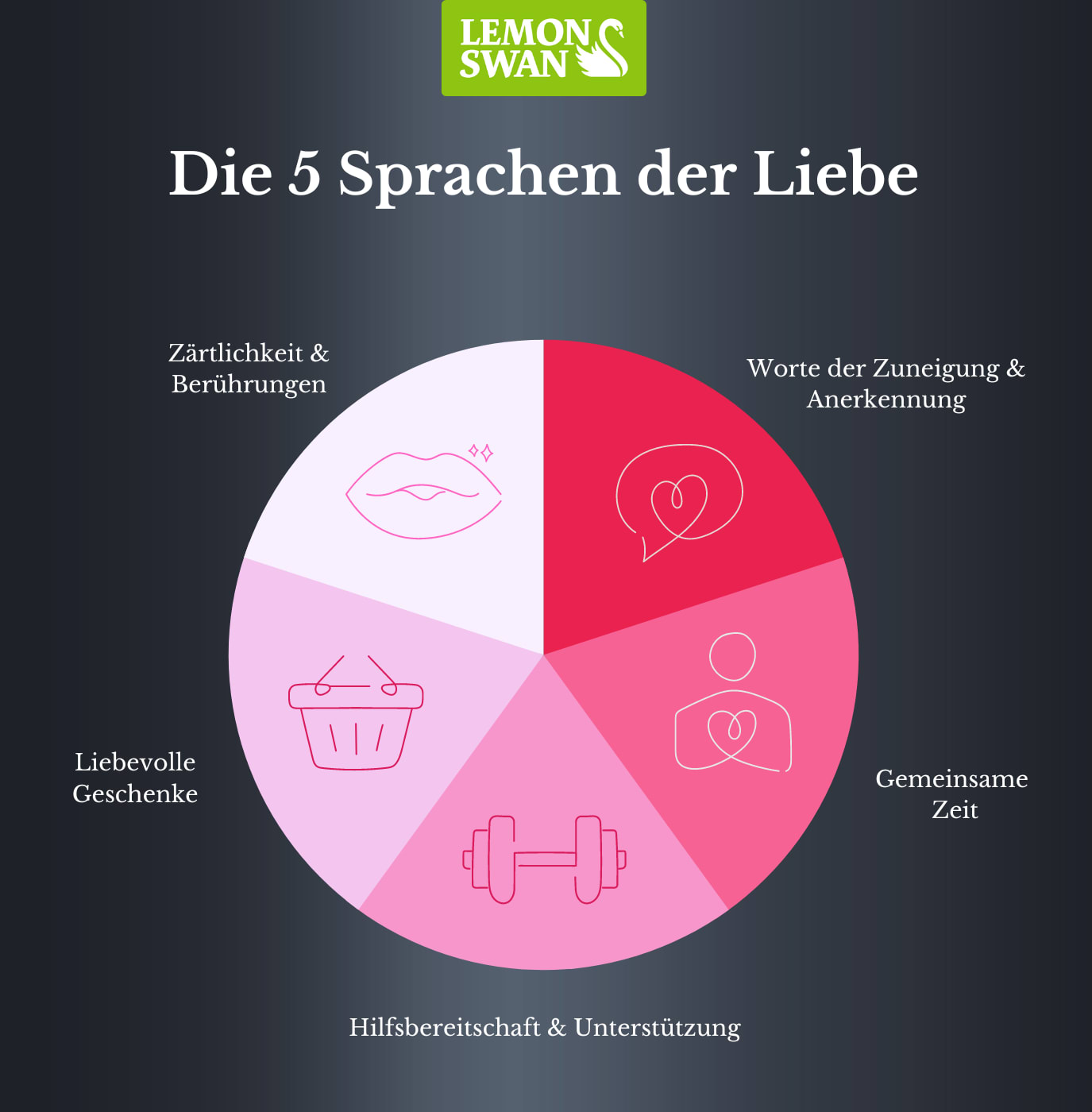
There are 5 languages of love in total, although it is also possible to “speak” a mix of several languages.
These are the 5 languages of love
1. Words of affection and appreciation
Words of affection or appreciation can be expressed in various ways. These can be nice compliments about appearance or words of agreement in a conversation. But praise for specific achievements or accomplishments also counts as this language of love.
2. Quality time/togetherness
One of the 5 love languages is expressed through spending time together and togetherness. People who speak this love language often show their affection and appreciation by setting aside exclusive time for each other. Whether it's romantic dinners together or attentive and affectionate (emotional) intimate conversations, people with a penchant for this language place a lot of value on quality time together.
3. Thoughtful gifts
Another way to express your love for someone or to receive love is through gifts and small tokens of appreciation. For example, do you feel especially valued when you receive an unexpected souvenir from a vacation or when you are given your favorite chocolates or beautiful spring flowers for no reason at all? Then one of your 5 love languages could be gifts.
4. Helpfulness and support
One of the 5 languages of love is helpfulness and support. Do you feel loved when you have someone who actively helps you in stressful times, or do you show your affection for others by, for example, helping them move house? People whose primary love language is helpfulness and support value community and reliability.
5. Affection and touch
A heartfelt hug or tender kisses can immediately bring a smile to your lips and mean more to you than praise or compliments. When you hold your partner's hand while walking, you feel safe and secure. Loving caresses or cuddling together give you a reassuring feeling.
How to learn each other's love language
We all receive love and affection in different ways. However, what we mean is not always understood by the other person. This can lead to misunderstandings and frustration. For example, if we constantly give our partner compliments or tell them how proud we are of them, this may be a loving gesture for us, but the other person may not perceive it that way. Instead, they may want to be held in our arms again.
To prevent such conflicts, it makes sense to recognize and learn each other's love language.
1. Don't assume others are like you
One of the biggest mistakes in friendships or relationships is that we assume others are like us. We often assume that our own needs must also be those of the other person. In doing so, we often forget that every person is unique and does not necessarily long for the same things as we do.
2. Observe
Most people who receive affection and love in a certain way also give it in the same way. So if you are not sure which of the 5 love languages your counterpart speaks, it is sometimes worth observing them quietly. For example, if you are often given gifts, it may be that the person will also appreciate a small token of appreciation from time to time.
3. Communication
The most important thing to avoid misunderstandings and conflicts is honest and open communication about your respective needs. Don't be afraid to share how you feel most loved. If you are unsure, ask your partner what they want.

Conclusion: There is no right or wrong way to express love and affection.
None of the five love languages is more or less correct than the others. We all express our feelings in very different ways. In any case, it is worthwhile to recognize and understand the other person's language. This can help avoid misunderstandings and strengthen the relationship.